• Skip to main content
  • Skip to header right navigation
  • Skip to after header navigation
  • Skip to site footer
  • WordPress
  • Facebook
  • Twitter
  • Instagram
  • YouTube
Sabino Canyon Volunteer Naturalists

Sabino Canyon Volunteer Naturalists

Appreciate the natural wonders of Sabino Canyon

  • This Month’s Events
  • Read Our Newsletter
  • Website Support
  • Log In
  • Home
    • About Us
    • Donations
    • Our Monthly Newsletter
      • Sign Up
      • View Previous Issues
  • What We Do
    • School Programs
      • Elementary Program
      • Kindergarten Program
    • Walks, Hikes & Demos
    • The Canyon Classroom
    • Conservation
    • Photo Galleries
      • Public Gallery
      • Marty’s Pix of the Day
  • Canyon Life
    • Birds
    • Fish, Amphibians & Reptiles
    • Insects
    • Mammals
    • Plants
  • Calendar
  • Become a Naturalist
  • Contact Us

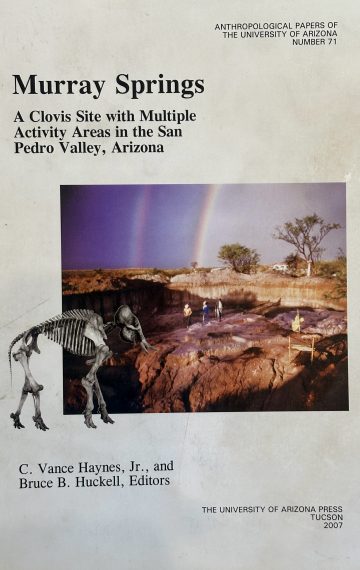
Murray Springs: A Clovis Site with Multiple Activity Areas in the San Pedro Valley, Arizona

By Haynes, C. Vance

Murray Springs: A Clovis Site with Multiple Activity Areas in the San Pedro Valley, Arizona

Call Number: Arch Hay

  • Publisher: University of Arizona Press, Tucson
  • Publication Date: 2007
  • ISBN: 978-0816525799
  • Edition: Anthropological Papers of The University of Arizona, Volume 71
  • Format available: Paperback, illustrated
Borrow or Return This Title

Description:

The Murray Springs Site in the upper San Pedro River Valley of southeast Arizona is one of the most significant Clovis sites ever found. It contained a multiple bison kill, a mammoth kill, and possibly a horse kill in a deeply stratified sedimentary context. Scattered across the buried occupation surface with the bones of late Pleistocene animals were several thousand stone tools and waste flakes from their manufacture and repair. Because of the unique occurrence of an algal black mat that buried the Clovis-age surface immediately after abandonment, the distributional integrity of the artifacts and debitage clusters is exceptional for Paleoindian sites. Excavation of the Clovis hunters’ camp 50 to 150 meters south of the kills revealed artifactual evidence typical of hunting camp activity, including hide working and weapons repair. Impact flakes conjoining with Clovis points clearly tied the camp to the bison kill. The unique nature of the site and this comprehensive study of the excavated material constitute one of the most important contributions to our knowledge of Paleoindian hunters in the New World.

-from Amazon.com

Return to Library Index

Sabino Canyon Volunteer Naturalists
5700 N Sabino Canyon Road
Tucson, AZ 85750

GET IN TOUCH
  • Our Facebook Group
  • Our Facebook Page
  • Home
  • About Us
  • What We Do
  • Canyon Life
  • Become a Naturalist
  • Calendar

Influence the future

“Sabino Canyon Volunteer Naturalists interpret nature for people of all ages. We’re helping to influence the future, while having fun!”

Copyright © 2017–2026 Sabino Canyon Volunteer Naturalists · All Rights Reserved · Powered by Mai Theme